
A Statsig Alternative Built Around Rollout Control
Statsig bundles feature flags with experimentation and product analytics in one platform. If you mainly need to control what ships, to whom, and how safely - targeting, staged rollouts, approvals, and a runtime config value on every variant - Featureflow gives you that at one flat monthly price with unlimited seats, without also buying an analytics platform you may not use.
Statsig is a strong choice if flags, A/B testing and analytics living in one console is the point. Featureflow is a better fit if flags and release management are the point, and you already have (or don't want) a separate analytics stack.
What Statsig is good at
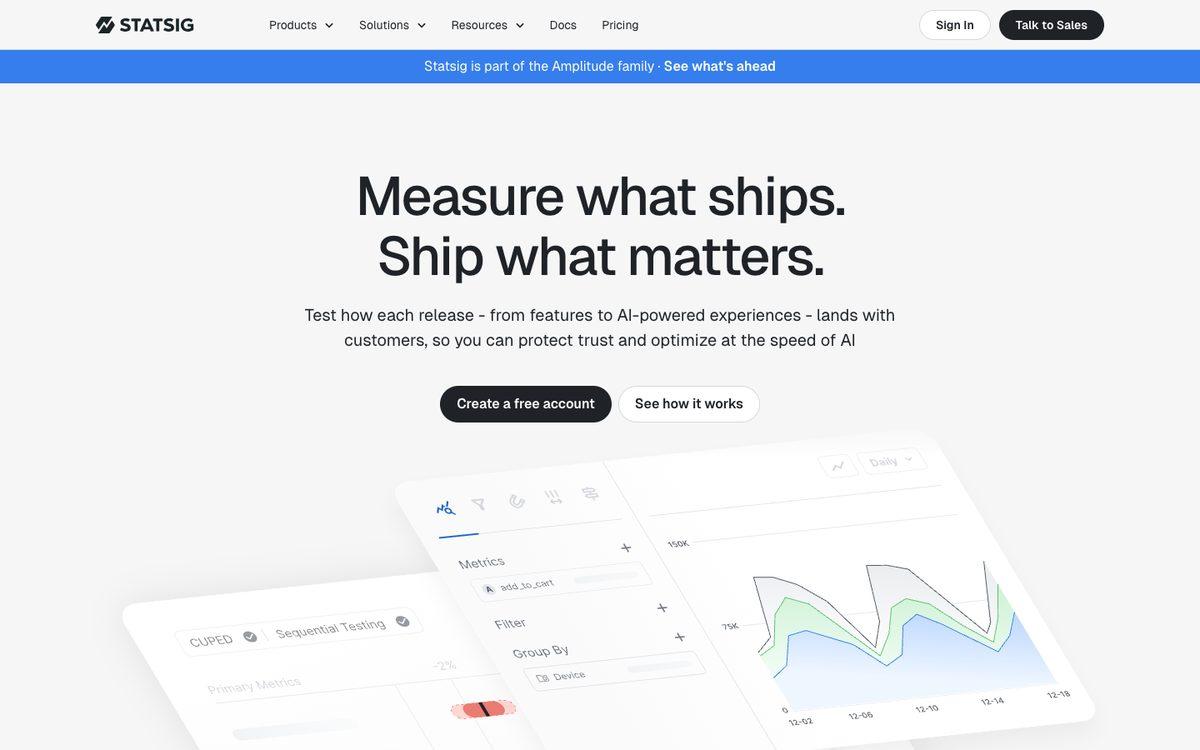
Statsig's feature gates and Dynamic Configs come with unlimited flag checks on every tier - it doesn't meter evaluations the way many competitors do. Its 'Reviews' workflow lets a project require peer approval before a gate, experiment or config change ships, and that full propose-approve-commit flow is also available through its Console API and its MCP server, so an AI agent can request changes and have them go through the same gate a human would. Ownership has changed twice: OpenAI announced it would acquire Statsig in September 2025, and in May 2026 Amplitude announced it would take on Statsig's brand and customers, and maintain and develop the current platform, including support for existing customers.
If your team wants flags, A/B testing and product analytics in a single console and is comfortable with a platform now owned by a large AI lab, Statsig is a reasonable place to stay. Teams that don't need the analytics half of the bundle, or that already run analytics elsewhere, are the ones who tend to go looking for something more focused.
Why teams pick Featureflow instead
Featureflow is priced and built around the release-management workflow: targeting rules and segments, percentage rollouts, a JSON configuration value on every flag variant, and - on the Business plan - release pipelines with approval workflows, where a pipeline defines the phases a flag moves through so a non-technical teammate can't misconfigure a rollout. It's a flat monthly price with unlimited seats, so the bill doesn't move as your team or your analytics usage grows.
You also get the operational surface most rollout-control teams actually use day to day: per-application SDK usage, connected SDK client visibility, evaluation counts per variant, and configurable STALE flag marking so old flags get cleaned up instead of forgotten. None of that requires adopting an experimentation or analytics product you didn't ask for.
Side by side
| Featureflow | Statsig | |
|---|---|---|
| Rollout control | Targeting rules and percentage rollouts on every plan, including Free. | Feature gates with percentage rollouts and targeting; unlimited flag checks on every tier. |
| Release pipelines & approvals | A defined pipeline of phases a flag moves through, with approval workflows on Business - self-serve, flat $399/month. | Optional per-project 'Reviews' gate requiring peer approval before a change ships, with a full propose-approve-commit flow available via the Console API and MCP. No multi-stage pipeline concept. |
| Runtime config | JSON value on every flag variant, not just booleans and strings. | JSON-capable via Dynamic Configs, alongside separate boolean feature gates. |
| SDK coverage | Server: Node.js, Java, Go, Python, Ruby, .NET. Client: browser JavaScript, React, React Native, native iOS, native Android. | 30+ SDKs across client, server and edge, including JavaScript, Python, Java, Go, Ruby, .NET, Swift, Android, and Unity. |
| Hosting model | Hosted SaaS - nothing to run or patch yourself. | Hosted SaaS. A 'warehouse-native' mode runs computation against your own Snowflake/BigQuery/Databricks data, but still depends on Statsig's cloud - not a full self-hosted option. |
| Pricing model | Flat monthly plan tiers - unlimited seats and unlimited flag checks, whether or not you also send us analytics events. | Usage-based on analytics events and session replay volume; flag checks themselves are unlimited on every tier. |
| AI agent tooling | MCP server plus published agent skills (setup, add-flag, targeting, experiments, cleanup) for AI coding assistants. | Statsig MCP server, wired into the same review workflow so agent-proposed changes can require the same approval as a human change. |
| Integrations | Full two-way Jira integration (see flag status in Jira, search your Jira tickets from within Featureflow), Slack, Datadog, Grafana, outbound webhooks, REST API. | Slack notifications, and a Datadog trigger integration that can toggle a gate from a Datadog metric. |
Statsig facts verified 19 Sep 2026 against Statsig's review workflow docs, feature flags overview, SDK docs, Slack integration docs, Datadog trigger docs, Statsig's pricing page, and Amplitude's May 2026 announcement on taking over the Statsig brand and customers. Featureflow pricing is on our pricing page.
Pricing models compared
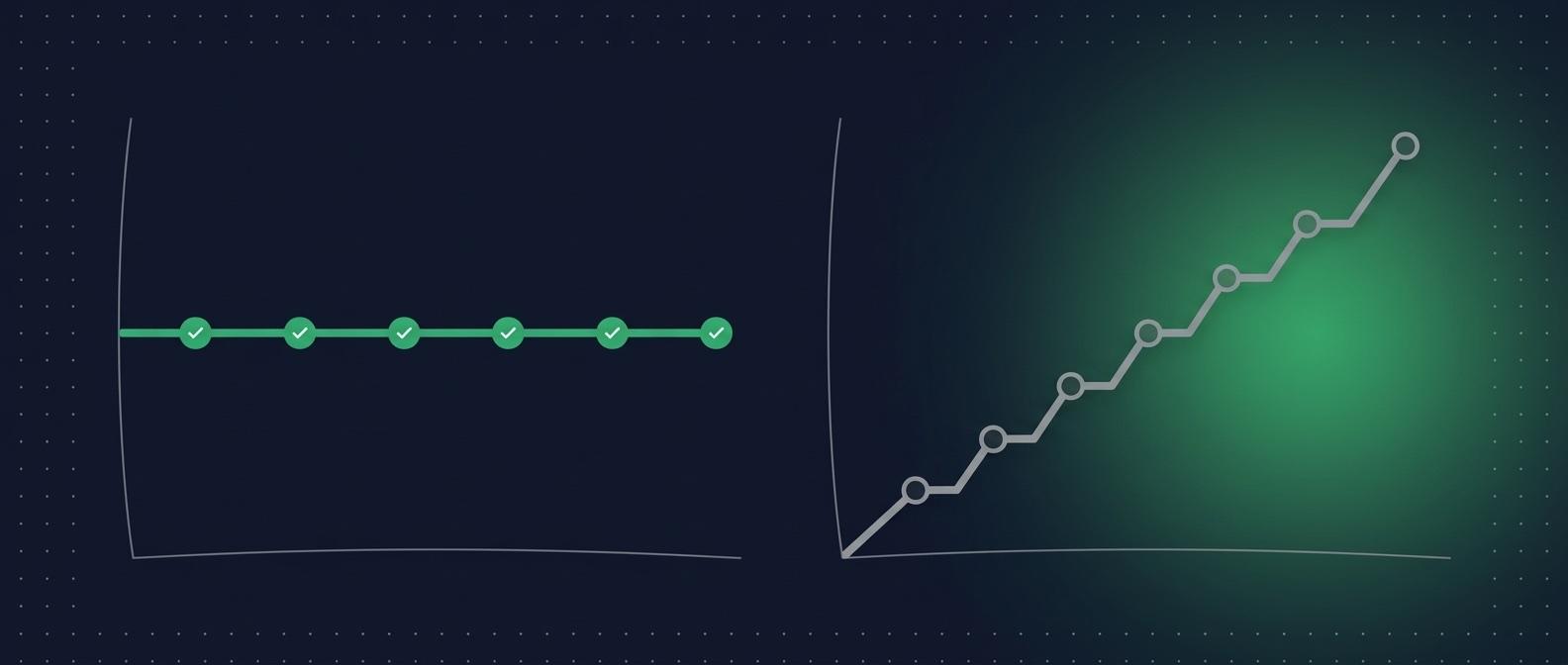
Statsig's bill moves with metered events: exposure events fired when a flag or experiment is checked, log events from SDK calls or third-party imports, and ingested or custom metrics. Its Developer plan includes a free monthly event allowance with unlimited flag checks and a session-replay allowance; Pro adds a base fee and a larger included event allowance, with additional events billed beyond that; Enterprise is a custom, volume-discounted contract - see Statsig's pricing page for current numbers. So a team that checks flags constantly but sends few analytics events pays little, while a team that instruments every page view pays more even if its flag usage is flat.
Featureflow doesn't meter events at all - the only number we count is SDK requests, and it's a fair-use ceiling that never cuts a flag off. If your team's cost driver is really "how much do we instrument," not "how many flags do we check," that's a genuinely different bill shape to budget against.
Governance and release workflow

Statsig's Reviews workflow - requiring peer sign-off before a gate, experiment or config change ships - along with role-based access controls, are Pro and Enterprise features; they aren't part of the free Developer plan. Featureflow's release pipelines and approval workflows sit on Business at a flat $399/month, and every new account gets a 14-day trial of the full Business plan to try them before deciding.
Both companies expose their approval flow through an API and an MCP server, so an AI agent's proposed change can be made to go through the same gate a human's would - a detail worth checking if your team is already agent-assisted.
SDKs and architecture
Statsig ships 30+ SDKs and splits them cleanly into client-side (JavaScript, React, React Native, Next.js, Angular, Swift, Android, Roku, Unity, Flutter, .NET Client) and server-side (Node.js, Java, Python, Go, Ruby, .NET Server, PHP, Rust) libraries, with the SDKs themselves handling caching, retries and networking. Featureflow's smaller, more focused SDK set (Node.js, Java, Go, Python, Ruby, .NET on the server; browser JavaScript, React, React Native, native iOS and native Android on the client) covers the same core languages most small-to-mid engineering teams actually run, without the long tail of niche client platforms Statsig maintains for its broader analytics audience.
When Statsig is the better choice
If experimentation and product analytics are the primary need - not just flags - and you want one console and one bill for all three, Statsig's bundle is built for exactly that, and unlimited flag checks remove one thing to think about. Featureflow doesn't do statistical experiment analysis or analytics dashboards; it's a rollout-control and configuration tool, not an analytics platform. If that's the gap you're trying to close and you don't already run your own experimentation tool, evaluate Statsig. If you do, pair it with Featureflow: the JavaScript and React SDKs send flag exposures to the experimentation or analytics tool you already run - a built-in Amplitude integration, documented recipes for Segment, Mixpanel, PostHog and Google Analytics 4, and a generic exposureIntegration callback for anything else.
You want rollout control and release pipelines at a flat price, and either don't run analytics/experimentation at all or already have a separate tool for it.
Flags, A/B testing and product analytics living in one console - with metered events, not metered flags - is the point, and you're comfortable with Statsig now being part of Amplitude.
Frequently asked questions
Does Featureflow replace Statsig's experimentation and analytics?
No. Featureflow handles rollout control and runtime configuration; it doesn't run statistical experiment analysis or product analytics. If that's what you use Statsig for, keep it. If you already run another experimentation or analytics tool, the JavaScript and React SDKs send flag exposures to the experimentation or analytics tool you already run - a built-in Amplitude integration, documented recipes for [Segment](https://docs.featureflow.io/segment-integration), Mixpanel, PostHog and Google Analytics 4, and a generic exposureIntegration callback for anything else.
Does Featureflow meter flag evaluations the way Statsig meters analytics events?
Featureflow meters SDK requests, with generous plan allowances (1M/month on Free, 10M on Team, 100M on Business) that are a fair-use guideline - passing one never cuts a flag off. Statsig doesn't meter flag checks at all, but does meter the analytics events and session replays it collects.
Who owns Statsig now, and does it affect Featureflow?
Statsig is now part of Amplitude: in May 2026 Amplitude announced it would take on Statsig's brand and customers and keep developing the platform, after OpenAI's 2025 acquisition. Featureflow is a separate, independent company and product. We mention it because ownership is a reasonable factor to weigh if you're choosing a tool for its long-term roadmap.
Do I need to pay for Statsig's Pro plan to get approvals?
Yes - Statsig's Reviews workflow and role-based access controls are Pro and Enterprise features, not part of the free Developer plan. Featureflow's release pipelines and approvals are on Business at a flat $399/month, with a 14-day full trial on every new account.
Does Statsig's pricing change if I only use flags, not analytics?
Statsig's meter is events (exposures, log events, ingested metrics), not flag checks - flag checks are unlimited on every tier. So a flags-only team pays little on Statsig's meter, but you're still buying an analytics platform's pricing model for a rollout-control job. Featureflow's flat plan tiers don't meter anything except SDK requests, with a generous fair-use ceiling.
Try rollout control without the analytics bundle
Free forever, no credit card - and every new account starts with a 14-day full Business trial, including release pipelines and approvals. Talk to us about your migration.
Start Now (Free)