
A Flagsmith Alternative With Flat, Predictable Pricing
Flagsmith is open source with a genuinely free self-hosted edition, and its hosted cloud plans combine a seat allowance with a monthly API-request allowance. Featureflow takes a different approach: one flat monthly price with unlimited seats on every paid plan, and the SDK-request allowance is a fair-use guideline rather than a billing line.
Flagsmith is a solid choice if you want an open-source core you can self-host for free, or a cloud plan sized around request volume. Featureflow is the better fit if you want a hosted service with a flat bill and generally-available release pipelines with approvals.
What Flagsmith is good at
Flagsmith's self-hosted, open-source edition is free to run, with unlimited flags, projects and environments - a real option if you want the control plane on your own infrastructure without paying for it. Its hosted cloud plans combine a seat allowance with a monthly API-request allowance, which can suit teams with a large user base but modest evaluation volume. Change requests give you a four-eyes approval workflow (create, approve, publish) similar to a pull request, and scheduled flags let you queue a change to apply automatically at a future time.
Flagsmith is also building a Release Pipeline feature that progresses flags through defined stages - development, staging, production - with time-based waits and automatic actions, and it can generate change requests when promoting to production. As of this writing it's in closed beta, so it isn't something you can rely on in production today.
Why teams pick Featureflow instead
Featureflow's release pipelines and approval workflows are generally available today, on the Business plan at a flat $399/month - not a closed beta you have to request access to. A pipeline defines the phases a flag moves through in production, so a non-technical teammate can advance a release without being able to misconfigure it, and every paid plan has unlimited seats, so the bill doesn't move with request volume or headcount.
You also get a JSON configuration value on every flag variant, SDKs across your stack, and operational visibility - per-application SDK usage, connected clients, evaluation counts per variant, configurable STALE flag marking - as part of the same flat price, with no separate infrastructure to run.
Side by side
| Featureflow | Flagsmith | |
|---|---|---|
| Rollout control | Targeting rules and percentage rollouts on every plan, including Free. | Targeting rules and percentage rollouts, available in both the self-hosted and hosted editions. |
| Release pipelines & approvals | A defined pipeline of phases a flag moves through, with approval workflows on Business - self-serve, flat $399/month. | Change requests give a generally-available four-eyes approval workflow. A separate Release Pipeline feature (staged promotion with waits and automatic actions) exists but is in closed beta. |
| Runtime config | JSON value on every flag variant, not just booleans and strings. | JSON Remote Config values supported alongside standard flags. |
| SDK coverage | Server: Node.js, Java, Go, Python, Ruby, .NET. Client: browser JavaScript, React, React Native, native iOS, native Android. | A broad set of official SDKs across server and client languages, shared between the self-hosted and hosted editions. |
| Hosting model | Hosted SaaS - nothing to run or patch yourself. | Open source - self-host the free edition, or use the hosted cloud. Self-hosting means running and upgrading it yourself. |
| Pricing model | Flat monthly plan tiers - unlimited seats, with no separate charge for request volume. | Free to self-host; hosted cloud plans combine a seat allowance (1 on Free, up to 20 on paid tiers) with a monthly API-request allowance, with additional request volume priced separately. |
| AI agent tooling | MCP server plus published agent skills (setup, add-flag, targeting, experiments, cleanup) for AI coding assistants. | A Flagsmith MCP server that lets agents create and update flags, manage segments, and work with change requests, compatible with MCP clients over remote (Streamable HTTP) connections. |
| Integrations | Full two-way Jira integration (see flag status in Jira, search your Jira tickets from within Featureflow), Slack, Datadog, Grafana, outbound webhooks, REST API. | Slack, Datadog, a generic webhook, and a Jira integration for viewing flags inside Jira. |
Flagsmith facts verified 19 Sep 2026 against Flagsmith's change requests docs, scheduled flags docs, release pipeline docs, pricing page, integrations page, and client SDK overview. Featureflow pricing is on our pricing page.
Pricing models compared
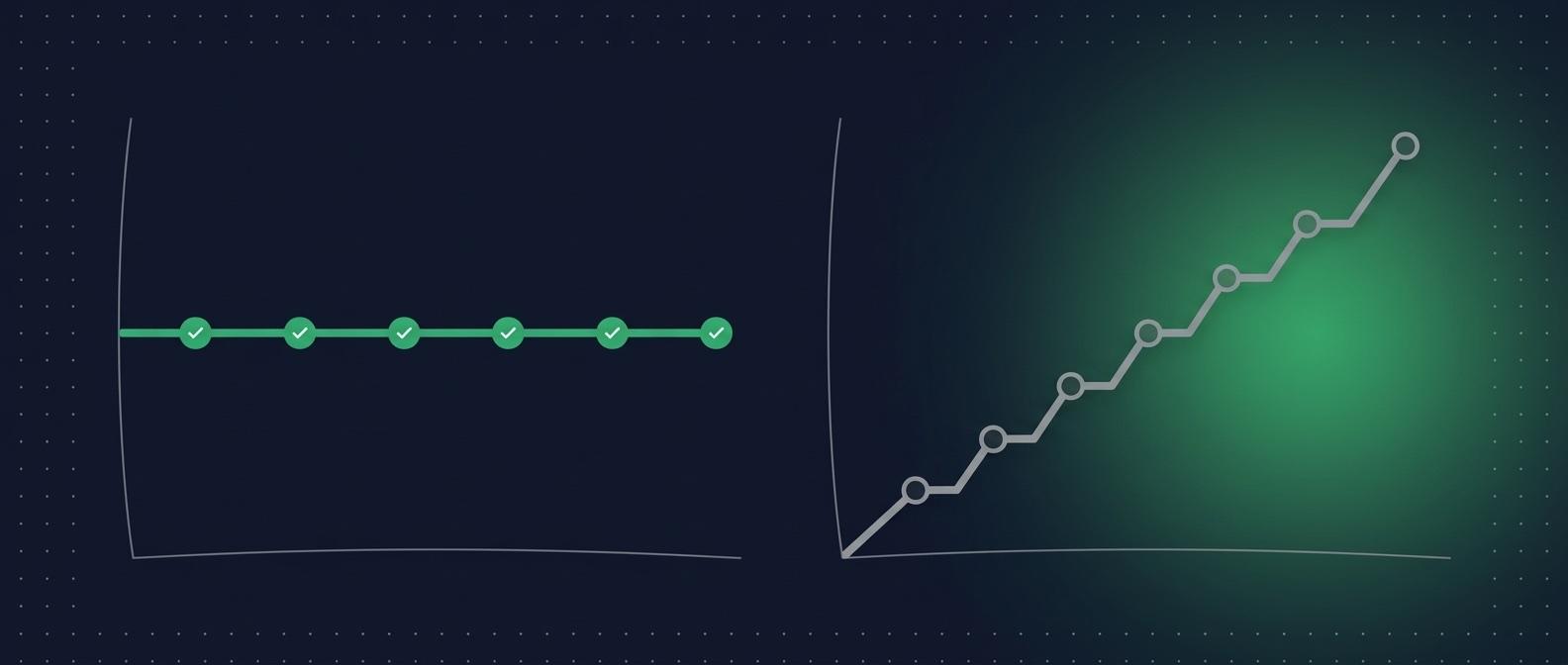
Flagsmith's cloud plans size seats and API requests together: each tier includes a seat allowance (Free is a single team member, rising through Start-Up and Scale-Up, which is expandable at an additional per-member charge) alongside a monthly API-request allowance, with additional request volume billed separately beyond that - see Flagsmith's pricing page for current allowances and rates. Cross a limit and Flagsmith doesn't cut you off - free-plan users get a grace window to upgrade, and paid customers get a grace period the first time they exceed their allowance before overage billing kicks in.
Featureflow's flat plan tiers decouple team size from request volume entirely: adding your tenth or fiftieth teammate doesn't change the bill, and the SDK-request ceiling is a fair-use guideline rather than a metered line item.
Worth sizing for your own traffic shape before assuming either model is cheaper: a small team with a high-traffic client-side app can outgrow Flagsmith's request allowance quickly even on its higher cloud tiers, while a large team with modest traffic might find the seat allowance the binding constraint instead. Flat pricing sidesteps the question entirely by not metering either dimension.
Governance and release workflow
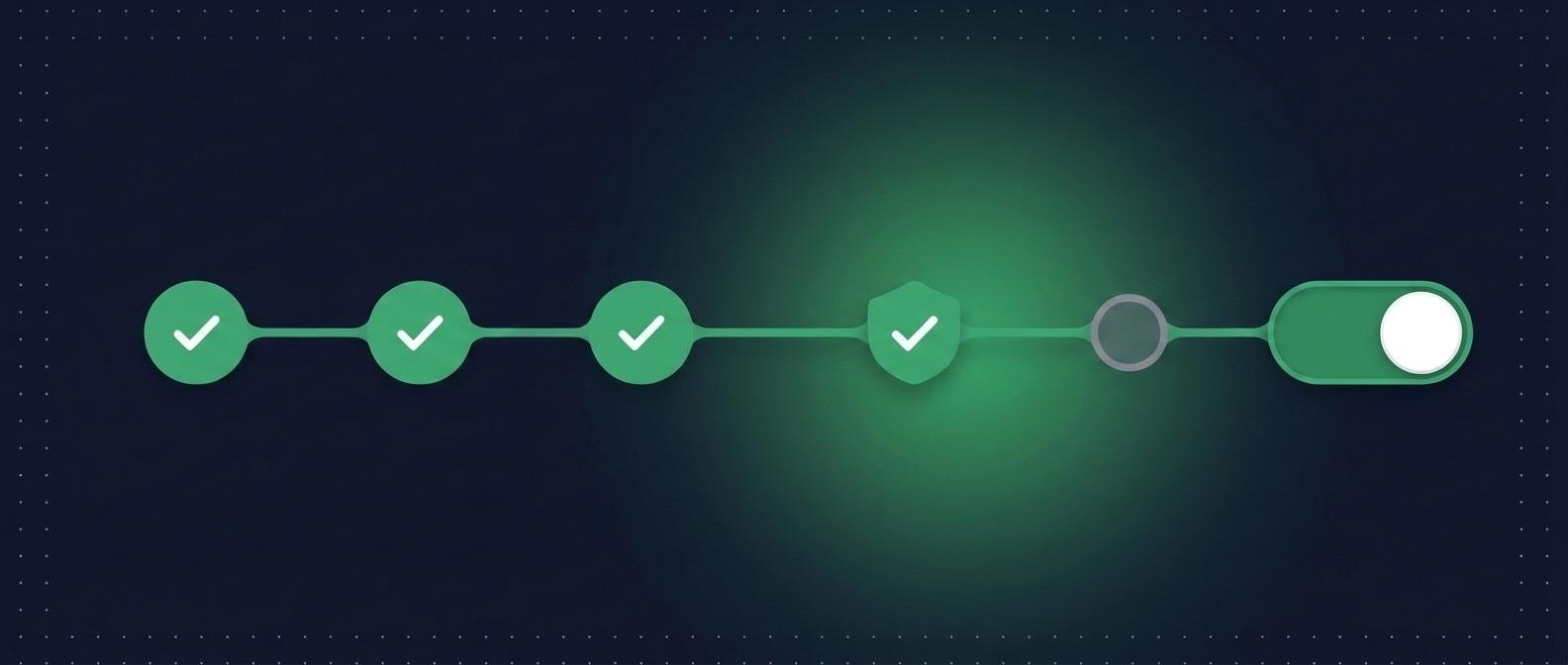
Per Flagsmith's own pricing page, Change Requests, Audit Logs and SSO/SAML are only available on the Scale-Up and Enterprise plans - the Free and Start-Up tiers don't include any of the three. Its separate Release Pipeline feature (staged promotion through development/staging/production with waits and automatic actions) remains a closed beta, so it isn't something you can put into production today regardless of plan.
Featureflow's release pipelines and approval workflows are generally available now, on Business at a flat $399/month, with a 14-day full-Business trial on every new account so you can test the actual workflow before committing to a plan.
SDKs and architecture
Flagsmith gives backend SDKs a genuine choice of evaluation model: local evaluation, where the SDK periodically pulls a full environment document and evaluates flags in-process without a per-request API call, or an Edge Proxy that moves evaluation closer to where requests originate. Client-side SDKs use public keys with restricted segment visibility for security. Featureflow's server SDKs evaluate in memory in a similar way, and client SDKs receive a pre-evaluated, CDN-cached payload rather than raw targeting rules - the same security trade-off, delivered without you needing to run a separate Edge Proxy component.
When Flagsmith is the better choice
If self-hosting for free is what you're after and you're comfortable running the service yourself, Flagsmith's open-source core is a real option that Featureflow doesn't offer - Featureflow is hosted only. And if your usage pattern is a large user base with modest API-request volume, Flagsmith's hybrid seat-plus-request cloud billing may work out favorably for your specific shape of traffic - worth sizing against your own numbers rather than taking either vendor's word for it.
You want release pipelines that are generally available today (not a closed beta) and a bill that doesn't move with either team size or request volume.
Free self-hosting is a real requirement, or your traffic shape - large user base, modest request volume - fits Flagsmith's hybrid seat-plus-request cloud pricing better than a flat tier.
Frequently asked questions
Can I self-host Featureflow like Flagsmith?
No - Featureflow is hosted only. If free self-hosting is a requirement, Flagsmith's open-source core is the better fit.
How does Featureflow pricing compare with Flagsmith?
Featureflow is a flat monthly price with unlimited seats on every paid plan - Team at $99/month, Business at $399/month - with SDK requests metered only as a fair-use guideline. Flagsmith's hosted cloud plans combine a seat allowance with a monthly API-request allowance, so cost can move with request volume as well as team size.
Does Flagsmith have release pipelines?
Flagsmith's docs list its Release Pipeline feature as a closed beta. Featureflow's release pipelines and approval workflows are generally available on the Business plan, and included in every 14-day trial.
Does Flagsmith's free plan include change requests or audit logs?
No - per Flagsmith's pricing page, Change Requests, Audit Logs and SSO/SAML start on the Scale-Up plan. The Free and Start-Up tiers don't include any of the three. Featureflow includes an audit trail on every plan, including Free, with approvals added on Business.
What happens if I go over Flagsmith's request allowance?
Flagsmith doesn't cut flags off - free users get 7 days to upgrade, and paid customers get a 30-day grace period the first time they exceed by up to 200% before overage charges apply. Featureflow treats its SDK-request ceiling the same way: passing it never cuts a flag off, and it's a fair-use guideline rather than a metered charge.
Try flat pricing with pipelines already out of beta
Free forever, no credit card - and every new account starts with a 14-day full Business trial, including release pipelines and approvals. Talk to us about your migration.
Start Now (Free)