
A Harness FME (Formerly Split) Alternative You Can Buy Without Sales
Split was a well-known standalone feature-management and experimentation platform before Harness acquired it in 2024; it's now sold as Feature Management & Experimentation (FME), a module inside the broader Harness software-delivery platform, and standalone Split pricing no longer exists. If you want feature flags without adopting the wider Harness platform or a sales-led buying process, Featureflow is a self-serve product at published, flat prices.
Harness FME is a strong choice if your organization is already standardized on Harness for CI/CD and wants feature management in the same platform. Featureflow is the better fit if you want a standalone flag tool you can start using today, at a price you don't have to negotiate.
What Harness FME is good at
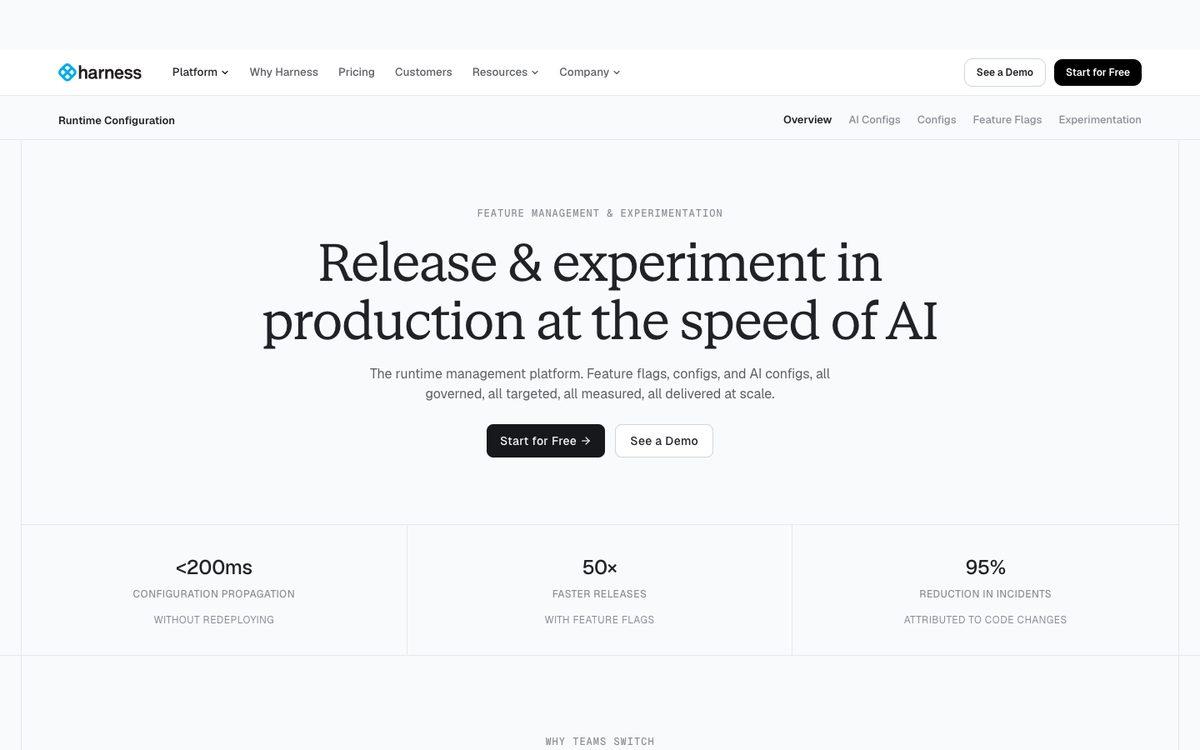
Harness FME carries forward Split's metrics-to-flag integrations and experimentation depth, now wired into the wider Harness delivery platform - genuinely useful if your CI/CD, feature flags and experimentation all need to live in one vendor relationship. Its approval workflows let an administrator restrict what editors can change in an environment, with a change routed to a designated approver or group before it publishes, and Harness FME ships Slack, Jira Cloud and Datadog integrations plus webhooks for metric alerts.
Organizations that have already made a platform decision around Harness for software delivery, and want feature management and experimentation to plug into that same platform and buying relationship, are the natural fit for FME.
Why teams pick Featureflow instead
Harness FME's pricing is quote-based and tied to a Harness platform decision - there's no published price to check against your budget before a sales conversation. Featureflow's plans are on the pricing page today: Free, Team at $99/month, Business at $399/month, Enterprise custom - unlimited seats on every paid plan, and you can be running with targeting rules and rollouts inside the hour.
Release pipelines and approval workflows are on Business at that same flat price, not something you size against a broader platform contract. If your team wants feature flags without also evaluating and buying into Harness as a delivery platform, that's the practical difference.
Side by side
| Featureflow | Harness FME | |
|---|---|---|
| Rollout control | Targeting rules and percentage rollouts on every plan, including Free. | Targeting rules and rollout percentages, plus flags tied into delivery pipelines and experimentation with metrics integrations. |
| Release pipelines & approvals | A defined pipeline of phases a flag moves through, with approval workflows on Business - self-serve, flat $399/month. | Administrator-configured approval workflows restrict what editors can change per environment, routing changes to a designated approver or group before publishing. |
| Runtime config | JSON value on every flag variant, not just booleans and strings. | Dynamic Configuration values, JSON or key-value, on flags. |
| SDK coverage | Server: Node.js, Java, Go, Python, Ruby, .NET. Client: browser JavaScript, React, React Native, native iOS, native Android. | A broad SDK catalog carried over from Split, covering major server and client languages. |
| Hosting model | Hosted SaaS - nothing to run or patch yourself. | Hosted, sold as a module inside the wider Harness software-delivery platform. |
| Pricing model | Published, flat self-serve pricing - Free, Team $99/month, Business $399/month - no sales call required to see a number. | Custom, quote-based - tied to a broader Harness platform decision rather than a published self-serve price. |
| AI agent tooling | MCP server plus published agent skills (setup, add-flag, targeting, experiments, cleanup) for AI coding assistants. | Harness FME MCP tools (part of the wider Harness MCP server) let agents discover, inspect, create and update flags and targeting rules through natural language. |
| Integrations | Full two-way Jira integration (see flag status in Jira, search your Jira tickets from within Featureflow), Slack, Datadog, Grafana, outbound webhooks, REST API. | Slack (app or legacy webhook), Jira Cloud (not Jira Server), Datadog, and webhooks for metric alerts. |
Harness FME facts verified 19 Sep 2026 against Harness's approval flows docs, Slack integration docs, Jira Cloud integration docs, Datadog integration docs, and FME MCP tools docs. We could not re-verify Harness FME's pricing structure or SDK architecture against fresh vendor documentation today (its docs site did not render for automated fetching); the sections below rely only on the sources above and Harness's public description of FME as a module of its platform. Featureflow pricing is on our pricing page.
Pricing models compared
Harness doesn't publish FME pricing on a self-serve page - it's quoted per customer as part of a broader decision about the Harness software-delivery platform, which is a fundamentally different buying motion than checking a number and signing up. Featureflow's plans are published and self-serve: Free, Team at $99/month, Business at $399/month, and only custom Enterprise pricing needs a conversation.
If your organization is already negotiating a Harness contract for CI/CD, bundling FME into that conversation may make commercial sense. If feature flags are the only thing you need from either vendor, a published price you can check today is the more direct comparison.
There's also a timing cost to quote-based pricing that's easy to underweight: a self-serve number lets an engineer size a tool against a budget in minutes, where a sales-led quote means looping in procurement before you even know whether the product fits. That difference alone rules Harness FME out for teams that want to be running before their next planning cycle.
Governance and release workflow
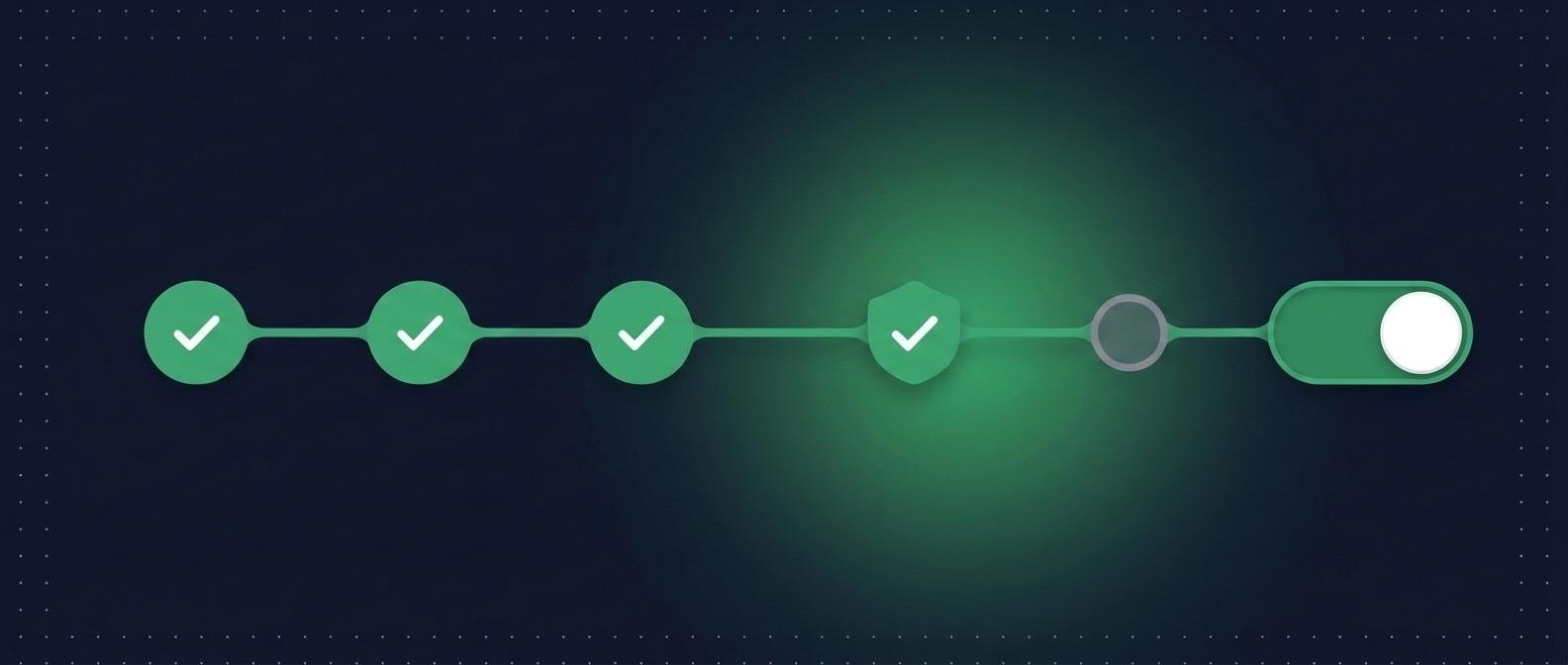
Harness FME's administrator-configured approval workflows restrict what editors can change per environment and route changes to a designated approver or group before they publish - a real per-environment governance control, per Harness's own approval-flows documentation. It's scoped as a permissions restriction rather than a named sequence of release phases. Featureflow's release pipelines instead define the phases a flag moves through toward production as a first-class concept, with approvals enforced at the phase that needs one, on the Business plan at a flat $399/month self-serve.
SDKs and architecture
Harness FME carries forward the SDK catalog Split built before the 2024 acquisition - a broad set covering major server and client languages - now positioned as part of the wider Harness platform's tooling. Featureflow's narrower, more focused SDK list (server: Node.js, Java, Go, Python, Ruby, .NET; client: browser JavaScript, React, React Native, native iOS, native Android) is built and maintained as a standalone product rather than one component of a larger delivery platform, which matters if you want feature flags without also adopting Harness's CI/CD tooling.
That breadth-versus-focus trade-off tends to track the buying decision itself: an organization evaluating Harness FME because it's already committed to Harness for delivery is optimizing for one platform covering more ground, while a team evaluating flag tools on their own merits is usually better served by a smaller SDK list that's actively maintained for the languages it does support, rather than a long tail inherited from an acquisition.
When Harness FME is the better choice
If your organization has already standardized on Harness for CI/CD and delivery, and wants feature management and experimentation inside that same platform and vendor relationship, Harness FME is a reasonable choice specifically because of that platform fit - Featureflow doesn't offer CI/CD or a delivery-pipeline product to plug flags into. That's a genuinely different buying decision than picking a standalone flag tool.
You want a standalone flag tool with a published, self-serve price, and no interest in adopting a broader CI/CD platform to get it.
Your organization has already standardized on Harness for software delivery, and folding feature management into that same platform and vendor relationship is the more efficient path.
Frequently asked questions
Is Harness FME the same product as Split?
It's Split's technology, rebranded and integrated after Harness's 2024 acquisition, now sold as Feature Management & Experimentation (FME), a module of the Harness platform. Standalone Split pricing no longer exists.
Can I see Featureflow's price without talking to sales?
Yes - Free, Team at $99/month, and Business at $399/month are all published and self-serve. Only custom Enterprise needs a conversation. Harness FME pricing is quote-based and tied to a broader Harness platform decision.
Do I need to adopt the whole Harness platform to use FME?
FME is sold as a module of the wider Harness software-delivery platform, so evaluate it in that context. Featureflow doesn't require adopting any CI/CD platform - it's a standalone feature-flag product.
How does Harness FME's approval workflow compare to Featureflow's release pipelines?
Harness FME lets an administrator restrict what editors can change per environment and route changes to a designated approver or group before they publish - a permissions-based governance control. Featureflow's release pipelines define the phases a flag moves through toward production as their own concept, with approvals enforced at the phase that needs one, on the Business plan.
Can I get a Harness FME quote without a broader Harness conversation?
FME is priced as part of the wider Harness platform decision, so expect that conversation to come up. Featureflow's Free, Team ($99/month) and Business ($399/month) plans are published and self-serve with no sales conversation required.
Try self-serve pricing you can check today
Free forever, no credit card - and every new account starts with a 14-day full Business trial, including release pipelines and approvals. Talk to us about your migration.
Start Now (Free)