
A PostHog Feature Flags Alternative Built for Release Management
PostHog's feature flags are one module inside a much larger product - analytics, session replay, surveys, a data warehouse. If you're using PostHog for feature flags specifically, and not the rest of the suite, Featureflow gives you a standalone release-management tool: targeting, staged rollouts, release pipelines and approvals, at a flat monthly price with unlimited seats.
PostHog is a strong choice if you already run PostHog for product analytics and want flags in the same dashboard. Featureflow is the better fit if release management - not analytics - is the job, and pipelines and approvals should be the focus rather than a side feature.
What PostHog is good at
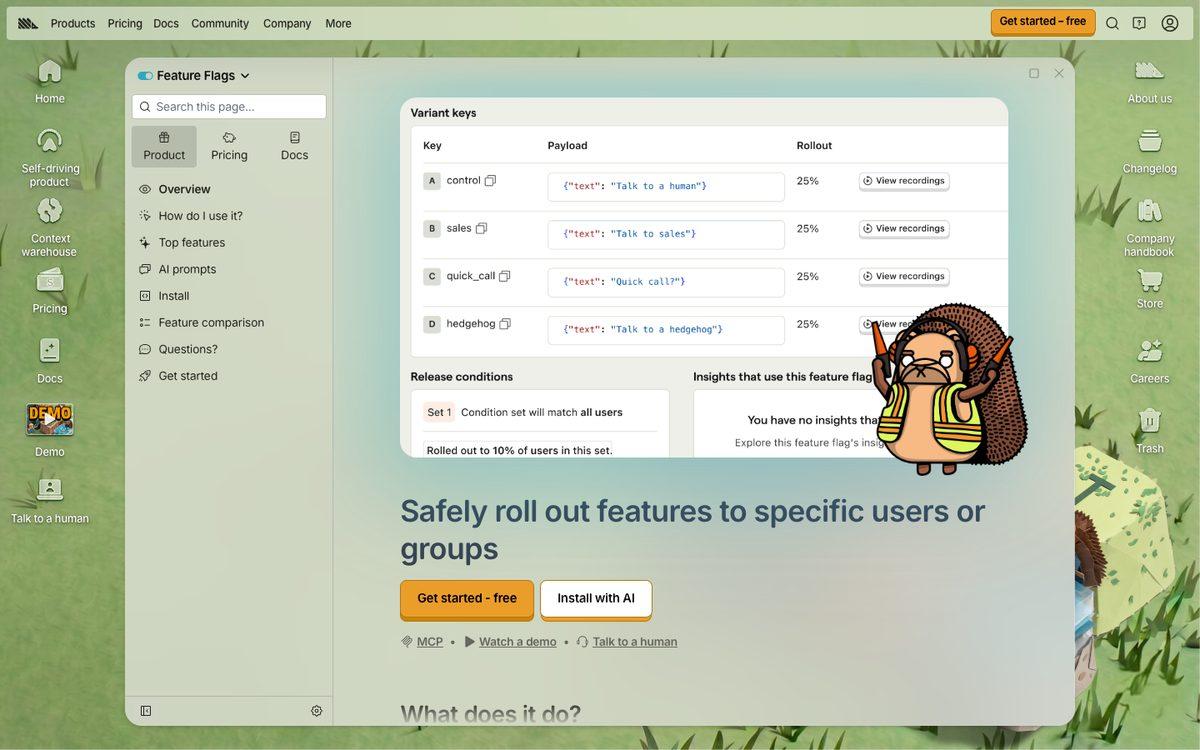
PostHog's flags sit next to analytics, session replay and A/B testing in one product, with a large free monthly allowance of flag evaluations before usage-based charges start - a real advantage if you want flags, funnels and replays without stitching tools together. Its Approvals feature adds a review step before high-impact flag actions (enable, disable, change rollout percentage) take effect: a gated action creates a change request, notifies designated reviewers, and applies automatically once quorum is reached.
If you're already in PostHog daily for analytics and replay, having flags in the same console genuinely reduces context-switching, and the flag-evaluation free tier is generous enough that many teams never see a bill for flags specifically.
Why teams pick Featureflow instead
Featureflow is built as a release-management product first, not a module of an analytics suite. Release pipelines define the phases a flag moves through toward production, with approval workflows enforced at the phase that needs them, on the Business plan at a flat $399/month - a defined lifecycle convention, not a single review gate bolted onto flag actions.
You also get a JSON configuration value on every flag variant, dedicated SDKs across server and client languages, and per-application usage visibility - built around the day-to-day job of shipping safely, rather than sitting alongside surveys and a data warehouse you may not use.
Side by side
| Featureflow | PostHog | |
|---|---|---|
| Rollout control | Targeting rules and percentage rollouts on every plan, including Free. | Targeting and percentage-rollout rules, with a large free monthly allowance of flag evaluations. |
| Release pipelines & approvals | A defined pipeline of phases a flag moves through, with approval workflows on Business - self-serve, flat $399/month. | Approvals add a review step for gated flag actions (enable, disable, change rollout) via change requests and reviewer quorum - a single gate, not a multi-stage pipeline. |
| Runtime config | JSON value on every flag variant, not just booleans and strings. | JSON flag payloads supported. |
| SDK coverage | Server: Node.js, Java, Go, Python, Ruby, .NET. Client: browser JavaScript, React, React Native, native iOS, native Android. | Server SDKs including Python, Ruby, PHP, Java, Go, Node.js, .NET and Elixir; client SDKs for browser, Android, iOS, React Native and Flutter. |
| Hosting model | Hosted SaaS - nothing to run or patch yourself. | Hosted by default, with an open-source core available for self-hosting. |
| Pricing model | Flat monthly plan tiers, as a standalone product - not one meter inside a wider usage-based analytics bill. | Usage-based, billed per flag evaluation - 1M requests free each month - with flags priced as part of PostHog's broader usage-based platform. |
| AI agent tooling | MCP server plus published agent skills (setup, add-flag, targeting, experiments, cleanup) for AI coding assistants. | An official PostHog MCP server exposing dozens of tools, including creating and managing feature flags, usable from Cursor, Claude Code and other MCP clients. |
| Integrations | Full two-way Jira integration (see flag status in Jira, search your Jira tickets from within Featureflow), Slack, Datadog, Grafana, outbound webhooks, REST API. | Slack (via data-pipeline destinations), and issue-tracker links (Jira, Linear, GitHub, GitLab) for session replay, alongside its broader data-pipeline connectors. |
PostHog facts verified 19 Sep 2026 against PostHog's approvals docs, feature flags docs, MCP docs, Slack destination docs, PostHog's pricing page, and local evaluation docs. Featureflow pricing is on our pricing page.
Pricing models compared
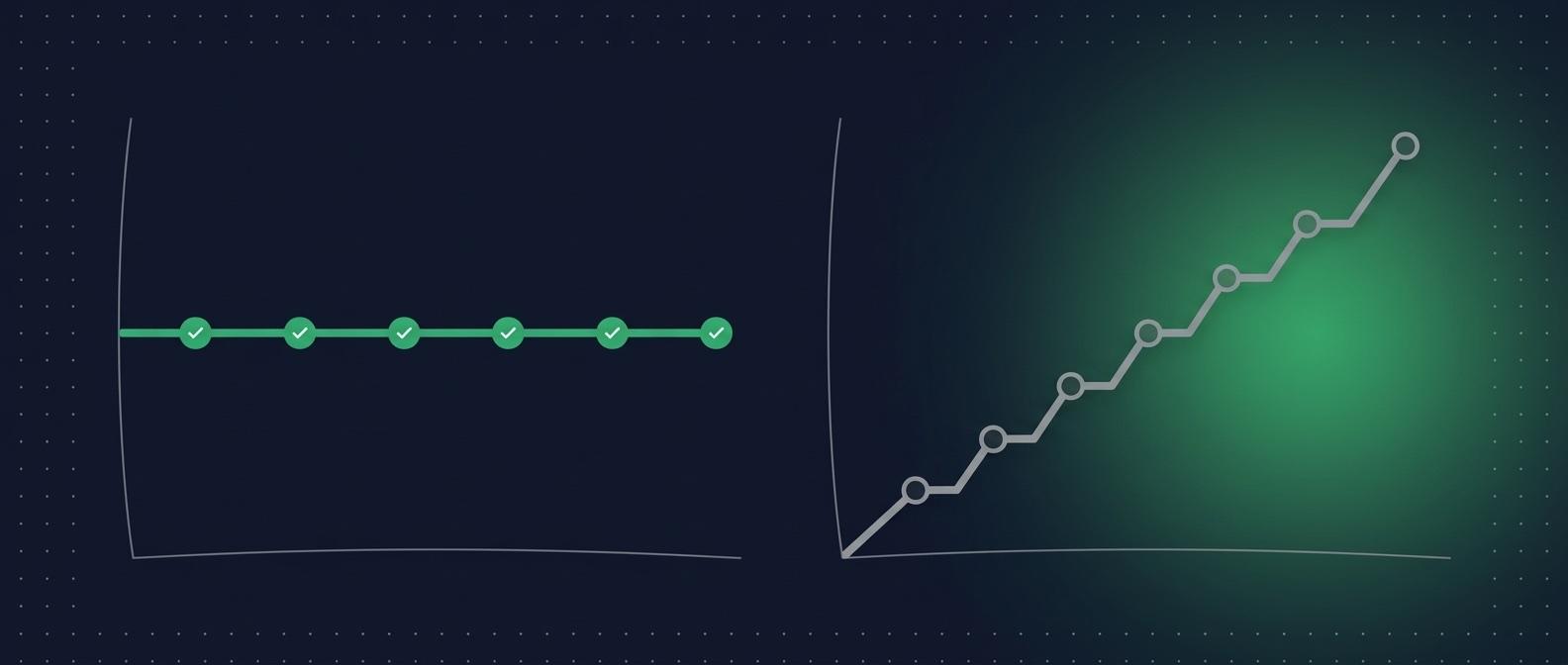
PostHog's pricing page gives feature flags 1M free requests every month, then bills per request as part of the same usage-based platform that prices analytics, session replay and the rest of PostHog - so your flag bill and your analytics bill are the same line item, and a spike in either can move the total. That's a reasonable trade if you're already deep in PostHog for analytics; it's a harder one to size if flags are the only piece you use.
Featureflow prices flags as a standalone product: a flat monthly tier with unlimited seats, where the only metered number is SDK requests treated as a fair-use ceiling rather than a per-unit charge.
Governance and release workflow
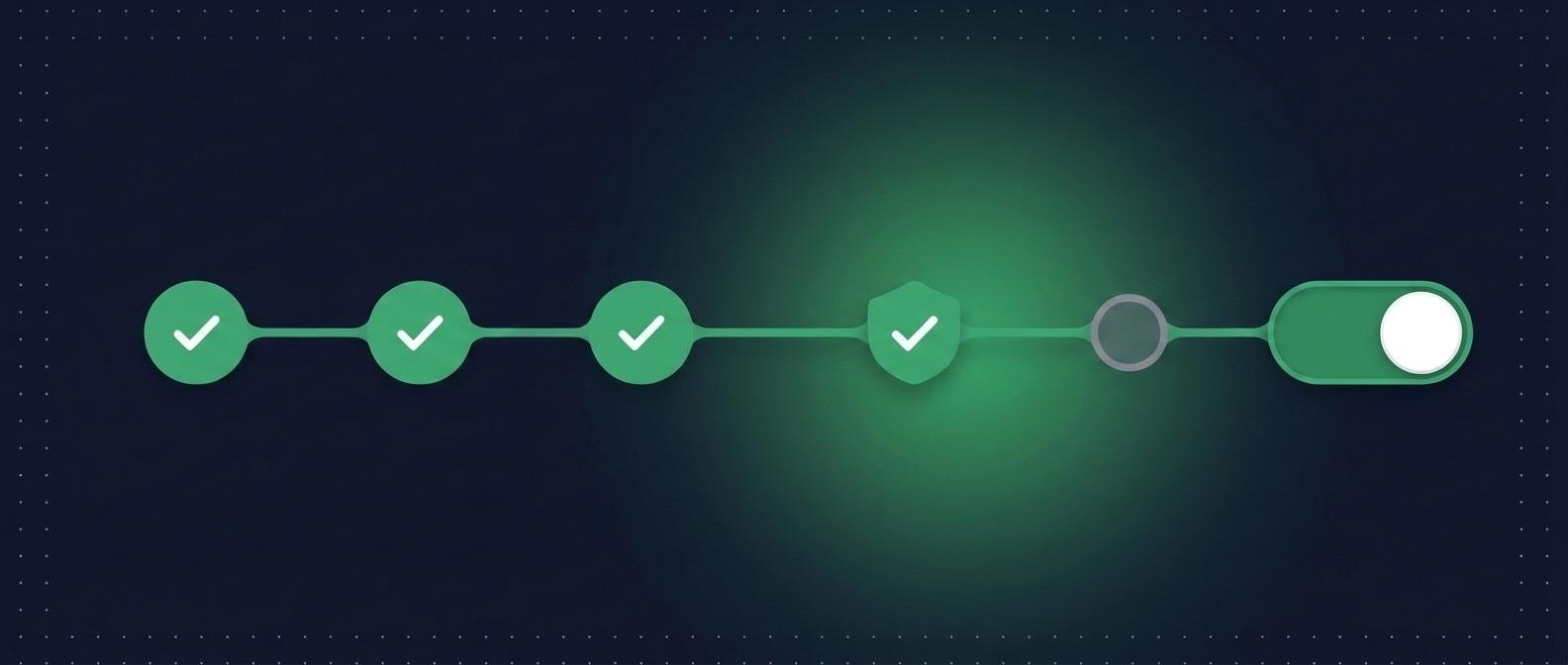
PostHog's Approvals feature gates specific flag actions - enabling, disabling, or changing a rollout percentage - behind reviewer quorum via change requests; PostHog's own MCP docs note that its approval tools require "the approvals entitlement," indicating it's a gated capability rather than something every plan gets by default, though PostHog's public docs don't spell out the exact plan boundary. Either way, it's a single action-level gate, not a sequence of phases. Featureflow's release pipelines define the full sequence a flag moves through toward production, with approvals enforced at the phase that needs one, on the Business plan.
The practical difference shows up in how a non-technical teammate experiences a release. An action-level gate stops a specific change until someone signs off, which is useful but leaves the rest of the process unstructured. A pipeline instead sets the whole convention up front - which phase comes next, who's targeted at each step, where approval is required - so a product manager moves a release forward through phases an engineer already defined, rather than making an ad hoc change and waiting on a reviewer.
SDKs and architecture
PostHog's local evaluation mode - available in its Node, Ruby, Go, Python, .NET, PHP, Java, Rust and Elixir SDKs - has the SDK fetch flag definitions in the background every 30 seconds and evaluate locally against them, so most flag checks don't hit PostHog's servers or count fully against your request allowance (only the periodic definition fetch is billed). It requires a secret API key and doesn't work for flags using experience continuity, early access features or static cohorts. Featureflow's server SDKs evaluate in memory the same way by default, with no separate 'local evaluation mode' to opt into and no billing distinction between an evaluation and a definition fetch.
The caveats matter in practice: PostHog's docs flag a cold-start delay of up to one polling interval on startup, and stateless environments like Lambda need an external cache provider to avoid repeatedly re-fetching definitions. Featureflow's client SDKs sidestep the cold-start question differently - the browser or mobile app receives an already-evaluated result from the CDN rather than raw definitions it has to evaluate itself.
When PostHog is the better choice
If you're already using or planning to use PostHog for product analytics, session replay or a data warehouse, keeping flags in the same product avoids running a second dashboard - that's a real advantage Featureflow can't match, since Featureflow doesn't do product analytics at all. Teams for whom flags are a small part of a broader PostHog adoption are usually better off staying put.
Release management - pipelines, approvals and rollout control - is the job, and you want flags priced and built as a standalone product.
You're already using or planning to use PostHog for analytics, session replay or a data warehouse, and want flags billed and dashboarded alongside them.
Frequently asked questions
Does Featureflow include analytics like PostHog?
No - Featureflow shows evaluation counts per flag variant and connected SDK usage, but it isn't a product analytics platform. If you need session replay, funnels or a data warehouse alongside flags, PostHog covers that in one product.
How do Featureflow's release pipelines differ from PostHog's Approvals?
PostHog's Approvals gate specific flag actions (enable, disable, change rollout) behind reviewer quorum. Featureflow's release pipelines define a full sequence of phases a flag moves through toward production, with approvals enforced at the phase that needs them.
Is Featureflow cheaper than PostHog for flags specifically?
Featureflow is a flat monthly price with unlimited seats. PostHog gives feature flags 1M free requests a month, then bills per request as part of its broader platform pricing - which is cheaper depends on your evaluation volume and whether you're also paying for the rest of PostHog.
Does PostHog's local evaluation mode reduce my flag bill?
Yes - PostHog's docs say local evaluation has supported SDKs fetch flag definitions periodically and evaluate locally, so most checks don't count fully against your request allowance. It has caveats: it needs a secret API key, and doesn't work for flags using experience continuity, early access features or static cohorts. Featureflow's server SDKs evaluate in memory by default, with no separate mode to enable and nothing billed per evaluation.
Try release management without the analytics suite
Free forever, no credit card - and every new account starts with a 14-day full Business trial, including release pipelines and approvals. Talk to us about your migration.
Start Now (Free)